Hot Water Extraction vs Bonnet Cleaning: How a Commercial Carpet Program Uses Both
The two carpet methods do different jobs, and the buildings that stay presentable use both on a schedule.
October 16, 2026 · 4 min read
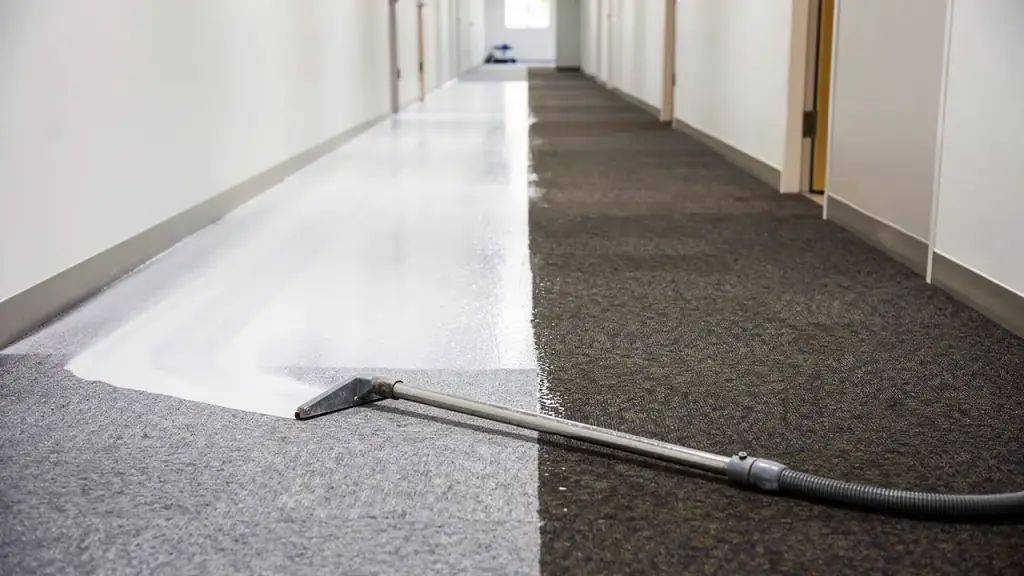
Most commercial buildings in Fargo and the branch cities have more carpet than anyone likes to think about: office floors, conference rooms, clinic waiting areas, school hallways, church sanctuaries. When a facility manager asks a cleaning company how the carpet gets cleaned, the honest answer is rarely one method. A good carpet program uses more than one, and each has a job. This post explains the two that matter most, hot water extraction and bonnet cleaning, and how they work together across a year.
What hot water extraction does
Hot water extraction is the deep clean. A technician applies cleaning solution and hot water to the carpet, then pulls the water and the loosened soil back out with a powerful vacuum built into the same tool. It is the method carpet manufacturers tend to prefer, which matters if you care about how long your carpet lasts. The reason is simple: extraction reaches soil that has settled down into the pile, not just the layer you can see from standing height.
Because it uses water, extraction asks more of the person running the machine. The technician has to control how much water goes into the carpet, work in overlapping lanes so no strip gets skipped, and pull enough back out that the floor is not left soaked. That is why credentials matter for this work. At Automated Maintenance Services (AMS), the carpet technicians are certified with the IICRC, which is the carpet cleaning certification to ask about.
Extraction also takes a room out of normal use for a while, since the carpet stays damp after the machine passes. Put it on the calendar for a low-traffic window such as an evening or a weekend, and keep chairs and desks from being pushed back into place on damp carpet.
What bonnet cleaning does
Bonnet cleaning is the interim method. A rotary machine spins an absorbent pad, called a bonnet, across the surface of the carpet, and the pad lifts soil as it turns. When the pad loads up, it gets flipped or swapped for a clean one. The method uses very little moisture, moves quickly, and gets the room back in service sooner. AMS describes it as the method that maintains a carpet's appearance year-round, and that is a fair way to think about it.
What bonnet cleaning is not is a deep clean. It works on the top of the carpet, so it does not pull out soil that is buried deep in the fibers. Used between extractions, it keeps a lobby or corridor from looking tired in the weeks in between.
How the two fit into one program
Think of a kitchen floor at home: you wipe it often and scrub it properly now and then. Bonnet cleaning is the wipe. Extraction is the scrub that resets the carpet. A commercial program usually blends them like this:
- Bonnet cleaning on a regular cycle in the places that look worn first: entrances, main corridors, elevator lobbies, reception areas.
- Hot water extraction on a deeper cycle for whole floors, with the timing set by how much traffic and outdoor soil the building sees.
- Carpet spotting between visits, so a coffee spill or an ink mark does not set into the fibers while it waits for the next scheduled service.
The right cycle for your building depends on use. A medical office with constant foot traffic needs a different rhythm than a rarely used training room. That is a conversation to have with the cleaner, not a number to copy from a brochure.
Why spotting matters more than it looks
Spotting is the third service AMS lists under carpet cleaning, and it is the one office staff notice first. Spots are easiest to remove when they are fresh and when the cleaner knows what made them. If a spill happens, blot it with a clean cloth from the outside edge toward the middle and leave it there. Scrubbing pushes the stain deeper and roughs up the fibers. Then tell whoever manages your cleaning what the spill was, if you know. Coffee, ink, and rust each call for different handling.
Matching the method to the space
Winter in North Dakota and Minnesota is hard on carpet. Sand, salt, and grit get tracked in from the parking lot, and grit is abrasive. It cuts into carpet fibers every time someone walks across it, which is why entrance mats and a regular vacuuming routine are worth more than they seem. A few quick rules of thumb:
- Entrances and main corridors: frequent bonnet cleaning, with extraction on a deeper cycle.
- Private offices and low-traffic rooms: less frequent service, with extraction doing most of the work.
- Waiting rooms and common areas: plan around hours when people are not using the space.
Questions worth asking any carpet cleaner
- Are your carpet technicians certified, and by whom?
- Which method will you use in each area, and why?
- How do you control moisture during extraction?
- What happens between scheduled visits when someone spills something?
If you manage a building in Fargo, Bismarck, Jamestown, Minot, Detroit Lakes, Billings, or Boise and want a carpet program built around how your space is actually used, call AMS at (701) 235-4412. The office is open Monday through Friday, 8 to 5, and AMS quotes each building on its own, so the plan starts from your floors and your schedule.
Automated Maintenance Services, Inc., (701) 235-4412
Call (701) 235-4412More articles
VCT, LVT, Linoleum, Ceramic and Wood: Why Each Hard Floor Needs Its Own Care Program
A single mop-and-wax routine cannot serve five floor types, and the wrong routine costs a building more than the right one.
What to Have Ready Before You Request a Commercial Janitorial Quote
Pricing a cleaning contract depends on details only you know, and a short list prepared in advance saves everyone a second call.