VCT, LVT, Linoleum, Ceramic and Wood: Why Each Hard Floor Needs Its Own Care Program
A single mop-and-wax routine cannot serve five floor types, and the wrong routine costs a building more than the right one.
October 16, 2026 · 4 min read
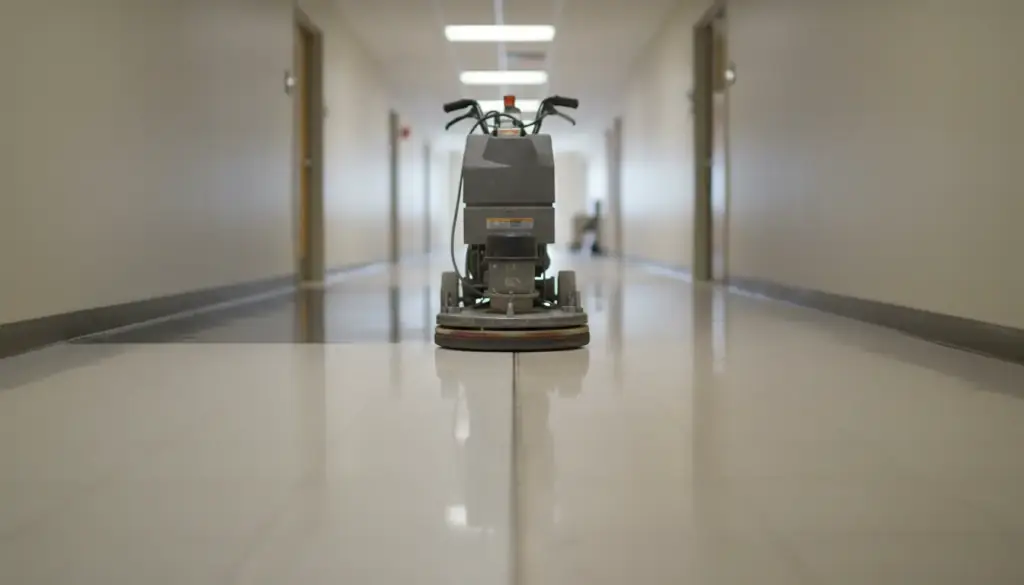
Walk through a typical commercial building and you may cross five different hard floors without noticing: vinyl composition tile in the corridor, luxury vinyl in the break room, ceramic in the restrooms, linoleum in the old wing, wood in the boardroom. They all look like "the floor." They do not behave like one. Each has a different surface, a different weakness, and a different idea of what counts as care. A floor program that treats them the same ends up wearing out the surface it was supposed to protect.
Automated Maintenance Services (AMS) lists vinyl composition tile, luxury vinyl tile, linoleum, ceramic, and wood among the floors it cares for, and it offers a consultation on the right service level for the building and its flooring. Here is why that conversation matters.
Vinyl composition tile: the floor that takes a finish
VCT is the classic commercial floor in schools, retail stores, and offices. It is porous and relatively soft, so it is normally protected with a floor finish, the coating most people call wax. That coating takes the daily abuse instead of the tile. Over time it scuffs, dulls, and collects grit, and a VCT program has a rhythm to deal with that.
- Daily dust mopping and damp mopping to keep grit off the finish.
- Scrubbing and recoating when the finish gets thin in traffic lanes.
- Burnishing, which is polishing the finish with a high-speed machine and a pad to bring back the shine.
- Stripping and refinishing when the old finish has built up or yellowed past what recoating can fix.
Burnishing is the step that gets noticed. A floor that looked flat can come back with a deep reflective shine after a pass with a burnisher, as long as the finish underneath is sound. A burnisher cannot fix a finish that has worn through.
Luxury vinyl tile: read the manufacturer first
LVT looks like wood or stone and is popular in newer offices and clinics. Many LVT products come with a factory wear layer, and manufacturers often have specific guidance on what should and should not go on top of it. Putting a heavy floor finish on a floor that does not need one can create more work, not less, because the finish then has to be maintained and eventually stripped.
The practical point is to find out what your product's maker recommends before the first service, and to tell your cleaner what you have. Guessing based on how the floor looks is how a good floor gets the wrong chemistry.
Linoleum: older, natural, and sensitive
Linoleum is made from natural materials and is still found in schools, churches, and older institutional buildings that were built to last. It can be damaged by strong cleaners that are fine on other floors, and it responds well to gentle, regular care and a finish suited to it. If your building has linoleum, make sure whoever cleans it knows that is what they are standing on. It is easy to mistake for vinyl.
Ceramic tile: the grout is the problem
Ceramic tile does not take wax. Its surface is hard and glazed, so the tile itself is rarely the issue. The grout is. Grout lines are porous and low, and they hold soil, which is why restroom and kitchen floors can look dirty even right after mopping. Ceramic care is about cleaning chemistry, the right machine, and attention to grout, not about finish and shine.
If a ceramic floor looks gray or smells stale, the mop water may be spreading soil across the grout instead of lifting it out. Machine scrubbing and rinsing, with fresh solution, solves a problem that more mopping makes worse.
Wood: protect the finish, not the wood
A wood floor in a commercial setting is usually protected by a sealed finish. Day-to-day care is dust mopping and light damp cleaning, because standing water and heavy wet cleaning can harm wood. When the finish dulls, the fix is typically a screen and recoat of the finish by someone trained to do it, not a wax or a harsher cleaner. Wood floors are the most likely of the five to be ruined by well-meaning but wrong care.
Putting a program together
A building with several floor types does not need five contractors. It needs one cleaner who sorts the building by floor type, assigns the right method to each area, and keeps notes so the next crew does not guess. A useful map has three columns: where the floor is, what it is, and what it gets. Add the schedule for the heavy work, such as stripping and refinishing, so it happens in a quiet window and not in the middle of a business week.
- Name every floor type in the building, by area.
- Note any manufacturer guidance for newer products such as LVT.
- Decide how often each area needs recoating, burnishing, or deep scrubbing.
- Plan the heavy work for hours when the space is empty.
AMS has been cleaning buildings in Fargo since 1970 and now serves Bismarck, Jamestown, Minot, Detroit Lakes, Billings, and Boise as well. If you are not sure what is under your feet or how it should be cared for, call (701) 235-4412 and ask about floor waxing and burnishing for your building.
Automated Maintenance Services, Inc., (701) 235-4412
Call (701) 235-4412More articles
Hot Water Extraction vs Bonnet Cleaning: How a Commercial Carpet Program Uses Both
The two carpet methods do different jobs, and the buildings that stay presentable use both on a schedule.
What to Have Ready Before You Request a Commercial Janitorial Quote
Pricing a cleaning contract depends on details only you know, and a short list prepared in advance saves everyone a second call.